Erik Peters · 12 October 2026
How Niche Online Forums Are Reshaping Color Palette Exchange Among Independent Illustrators
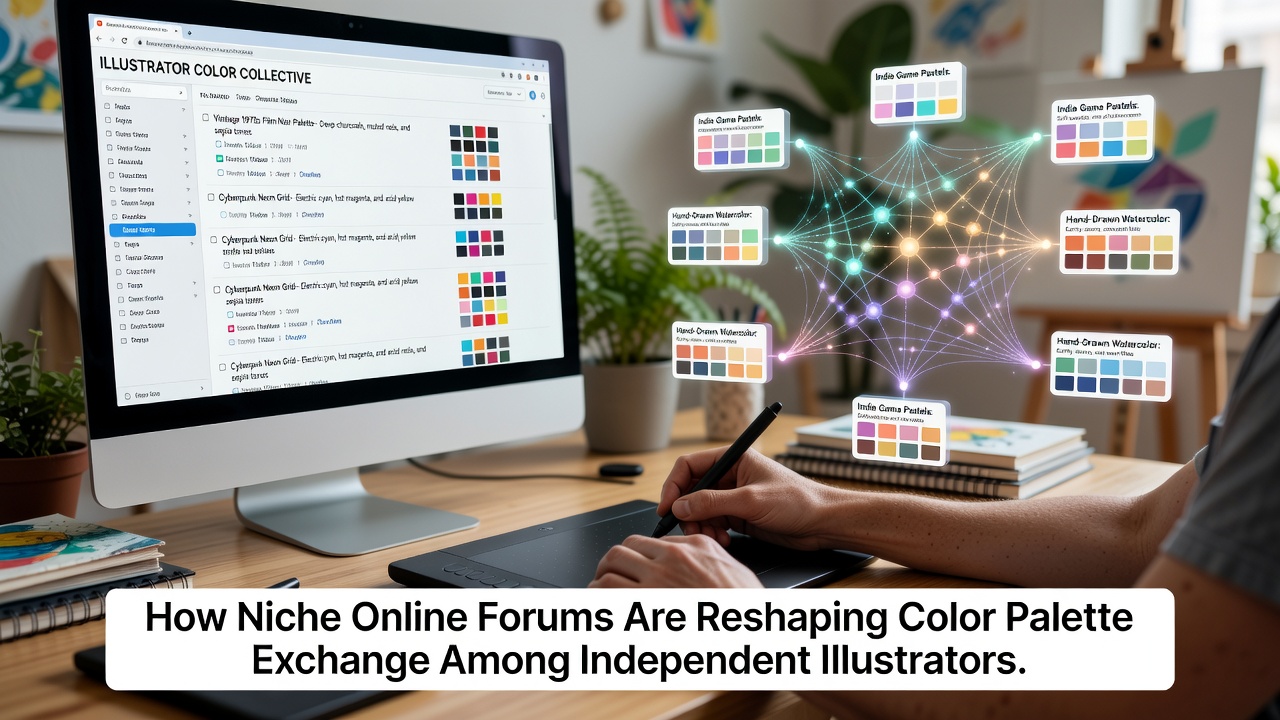
Independent illustrators have turned to specialized online forums as primary spaces for exchanging color palettes, and these platforms now handle thousands of shared swatches each month. Communities built around particular software tools or artistic styles allow members to upload, modify, and discuss palettes in threaded conversations that run for weeks, while built-in version tracking shows how a single set of hues evolves through collective input.
Platform Growth and Participation Trends
Smaller, invitation-only forums emerged around 2023 on platforms such as Discord and dedicated web boards, and by October 2026 membership across the ten largest illustrator-focused servers had reached more than 180,000 active accounts. Participation data collected by the Digital Arts Research Institute in Canada indicate that 62 percent of users join specifically to locate palettes rather than to post original artwork, a reversal from earlier social-media patterns where visibility of finished pieces drove most activity.
Forum software often integrates directly with illustration programs through API connections, so an artist can drag a palette file from a discussion thread straight into their canvas without leaving the application. This seamless workflow reduces the steps once required when palettes circulated through email attachments or cloud folders, and it has led to measurable increases in the frequency of palette updates within individual projects.
Mechanics of Palette Sharing and Iteration
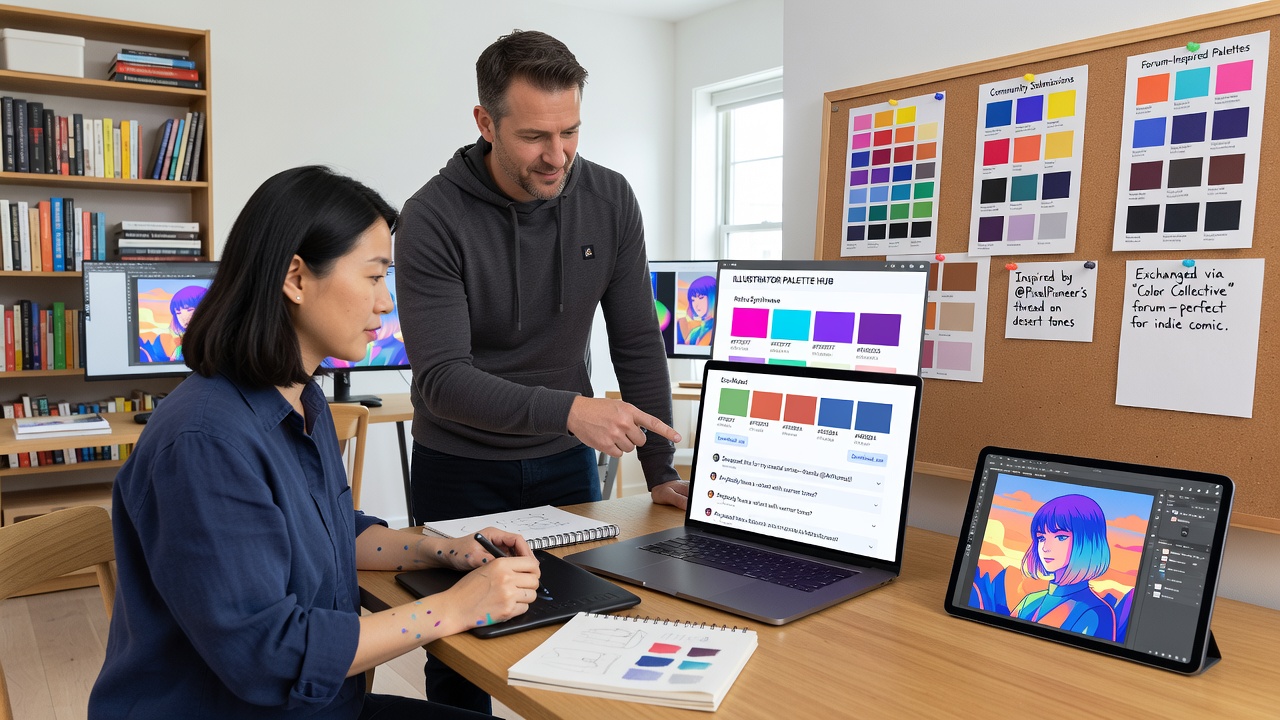
Users post starting palettes accompanied by project screenshots and technical notes on lighting conditions or print specifications, after which other members reply with adjusted versions that account for different screen calibrations or paper stocks. Thread participants frequently attach JSON or ASE files that contain precise LAB or HEX values, and automated bots log each revision so anyone can trace the lineage of a given color set back to its original contributor.
One study conducted at the Royal Melbourne Institute of Technology examined 4,200 threads from three prominent forums and found that palettes undergo an average of 7.4 modifications before the original poster declares the set complete. The same research noted that threads lasting longer than fourteen days attract contributors from at least four different time zones, expanding the range of cultural and regional color preferences represented in the final files.
Impact on Workflow and Creative Output
Independent illustrators report that access to these repositories shortens the initial color-selection phase of a commission by roughly thirty percent, according to survey responses gathered by the European Association of Digital Artists in 2025. Because palettes arrive with documented usage histories and compatibility notes, artists spend less time testing combinations and more time refining composition and narrative elements within their illustrations.
Cross-pollination between formerly separate niches has also become common. A palette developed for a dark-fantasy book cover might appear weeks later in a thread about botanical illustration, where members adapt its muted greens and earth tones for daylight scenes. Such transfers occur because forum search functions index both visual tags and technical metadata, allowing users to locate relevant files even when the original context differs from their own project requirements.
Challenges in Standardization and Attribution
While the volume of shared palettes continues to rise, questions around attribution and version control persist. Some forums have introduced mandatory credit fields that link back to each contributor's profile, yet enforcement relies on community norms rather than technical barriers. Observers at the 2026 Digital Color Symposium noted that 14 percent of sampled files lacked complete attribution chains, prompting several server administrators to experiment with watermarking tools that embed contributor IDs directly into palette metadata.
Security practices also vary. Larger forums require two-factor authentication and encrypted file uploads, whereas smaller groups still permit open registration and direct downloads. Artists working under client nondisclosure agreements often maintain private sub-channels within these forums to exchange palettes without exposing project details to the wider membership.
Conclusion
Niche online forums have established themselves as central infrastructure for color-palette exchange among independent illustrators, and their influence appears in both daily workflows and longer-term creative networks. As participation numbers stabilize and technical integrations deepen, the volume of shared resources and the speed of iterative refinement will likely continue to shape how illustrators approach color decisions across projects of every scale.