Mia Brooks · 14 September 2026
Inside the Mechanics of Dynamic Hue Adjustment Systems for Professional Artists
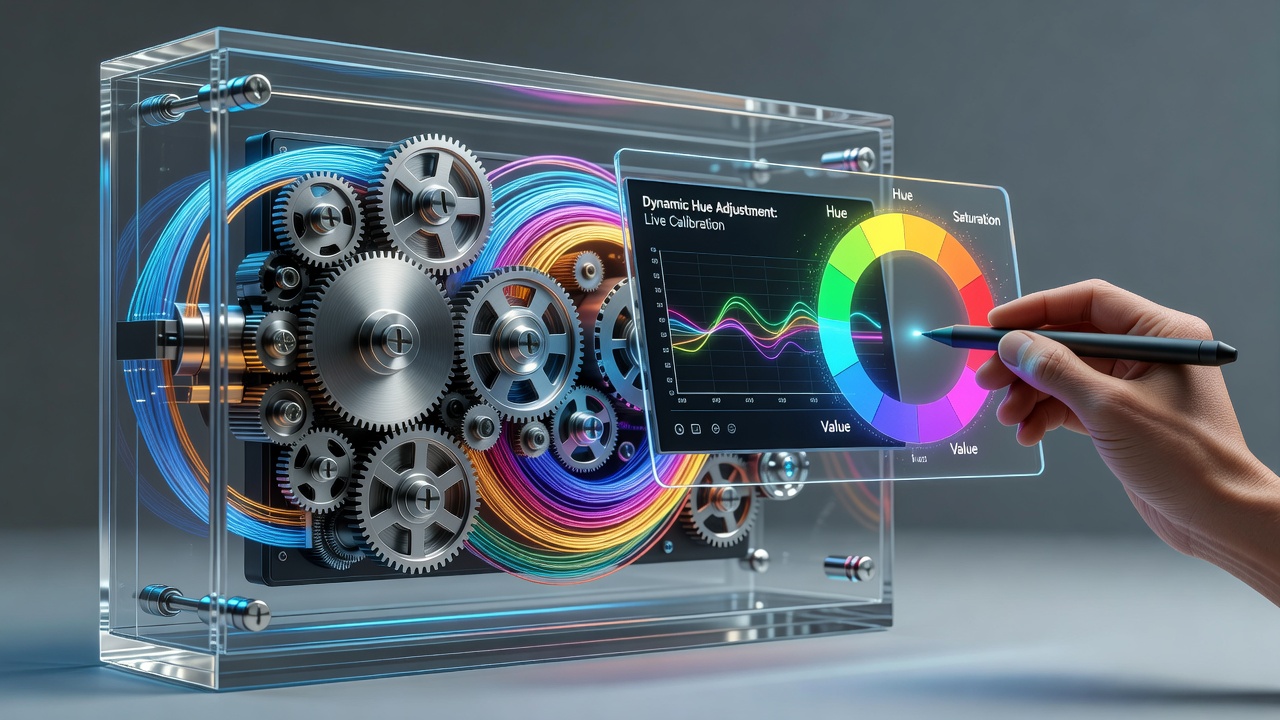
Dynamic hue adjustment systems allow professional artists to modify color values across entire compositions or selected layers while preserving luminance and saturation relationships, and these tools rely on color space transformations that convert RGB data into perceptually uniform models such as CIELAB or HSL before applying rotational shifts around the hue axis.
Core Algorithms Behind Real-Time Processing
Software engineers implement matrix multiplications and lookup tables that recalculate pixel values at interactive speeds, while GPU shaders handle parallel computations so that adjustments appear instantaneous even on high-resolution canvases exceeding 8K dimensions, and data from color science laboratories indicates that perceptual uniformity prevents banding artifacts that once appeared in older RGB-only pipelines.
Engineers integrate dithering patterns and edge-preserving filters that maintain detail integrity during shifts, yet the underlying mathematics draws from established CIE standards that define how human observers perceive differences in chroma and hue angle across varying lighting conditions.
Integration with Professional Workflows
Digital painting applications connect these systems to brush engines and layer stacks so that hue changes propagate through masks and adjustment layers without forcing artists to rasterize content prematurely, and recent updates scheduled for September 2026 introduce adaptive sampling rates that reduce computational load when working with complex vector-based illustrations.
Artists working in animation pipelines benefit from keyframe interpolation that applies dynamic hue curves across time, whereas still-image specialists often combine the same engines with histogram analysis tools that suggest complementary palettes drawn from reference photography captured under controlled illuminants.
Hardware Considerations and Color Management
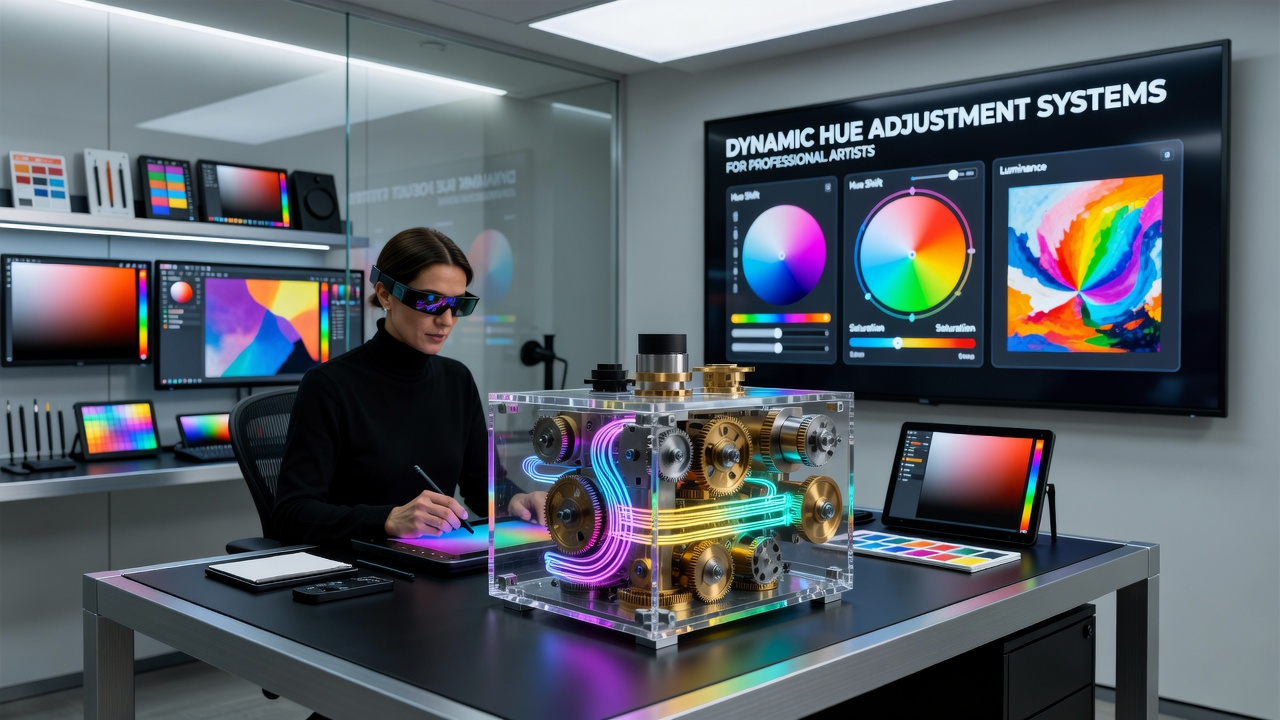
Calibration hardware from manufacturers in Japan and Germany feeds ICC profiles directly into the adjustment pipeline, ensuring that hue rotations remain consistent when files move between monitors, projectors, and print devices, while research from the Rochester Institute of Technology demonstrates that profile mismatches account for the majority of unexpected color shifts reported in collaborative studio environments.
Networked rendering farms distribute hue adjustment tasks across multiple nodes when final output requires batch processing of thousands of frames, and this distributed approach maintains bit-depth integrity through 16-bit and 32-bit floating-point buffers that accommodate extended dynamic ranges demanded by HDR workflows.
Emerging Developments and Industry Standards
Industry groups such as the Academy of Motion Picture Arts and Sciences continue to refine ACES color encoding specifications that incorporate dynamic hue modules, allowing seamless exchange of adjustment data between different software packages used in film and game production, and figures released by the Entertainment Software Association show steady growth in adoption of these standardized pipelines among mid-sized development studios.
Developers now embed machine-learning models trained on millions of artist-approved color pairings that propose initial hue offsets based on semantic content recognition, although final decisions remain under manual control to preserve creative intent across diverse cultural and stylistic contexts.
Conclusion
Dynamic hue adjustment systems combine established color science principles with modern parallel processing hardware to deliver precise, reversible modifications that fit naturally into professional creative pipelines, and ongoing refinements scheduled through 2026 continue to expand compatibility with emerging display technologies while upholding the accuracy requirements of commercial illustration and animation production.